

02 Mar 3D printing as an aid to architectural metalwork manufacture and design
In 2025, the UK 3D printing market was valued at $1.01 billion, 72% of which was for industrial applications. Interest in this new technology is set to grow, with the overall UK 3D printing market estimated to reach $2.13 billion by 2031.
Interestingly, 50.35% of the reported ‘material type’ share was attributed to metal materials, signalling huge potential in the transformation of architectural metalwork production over the coming decades.
With a constant eye on innovation and technological advancements, PAD Contracts has always been proactive in embracing new technology that enhances production processes and the lifecycle of structures.
Aware of the benefits to our clients, particularly at project design stage, we are wholly committed to exploring how 3D printing technology can be incorporated into our metalwork processes to print metals to an architectural scale.
It’s only a matter of time until PAD Contracts can commercially print your architectural metalwork, turning robot welders into 3D printers to build your bespoke objects.
-
- Figure 7
-
- Figure 3
-
- Figure 4
-
- Figure 6
How is 3D printing used in architectural metalwork?
3D printing is an ‘additive’ (layer by layer) process that is used for the fabrication of high-strength architectural metalwork such as facades, structural supports, staircases, bridges and balustrades.
Architectural metalwork designers can produce lightweight, yet strong components that are complex or bespoke to the needs of the client, without the limitations that can hamper traditional ‘subtractive’ processes for shaping metal, including cutting, drilling, milling and grinding.
For both the design and manufacturing process, 3D printing offers several benefits which extend to the full lifecycle of the final metalwork product.
The benefits of 3D printing in architectural metalwork
Presentation of designs in 3D format
Presenting physical, three dimensional prototypes or components, derived from digital models and supported by technical drawings, allows designers to communicate their vision more clearly and quickly to the client.
Not only can the structure be visualised more clearly, it can also be handled to assess key physical requirements (see testing below). Such comprehensive, tactile insight gives the client confidence in their evaluations and decisions for fabrication.
Prototyping and testing
3D prototypes can be tested for key issues such as load bearing, structural integrity, scale and proportion, surface finishes, material optimisation, assembly, internal stresses and material suitability.
Multiple iterations of a design can be produced quickly, either to address issues found in earlier prototypes or to explore alternative options. Testing in this way, at such an early design stage, avoids complications that may not otherwise be found until much later in the process, at which point remedial costs will be higher.
Reduced material waste
Reduced material waste results in more cost-efficient and sustainable projects. Research published in August 2025 claims that 3D printing reduces material waste by up to 60%, predominantly due to enhanced precision and moving away from traditional cutting and machining processes that produce more scrap.
Improved safety
During production, 3D printing reduces operator exposure to the hazardous environments of traditional subtractive processes such as cutting, grinding and high temperatures.
For the long term safety of the product, 3D printing offers a ‘predictive safety management’ approach. This involves testing safety and durability requirements such as fatigue resistance, internal stresses, material performance, industry compliance and environmental factors.
Predictive safety management is further enhanced when using digital twin technology, whereby a virtual replica of the 3D printing process monitors the safety of the metalwork structure throughout its lifecycle from design to decommissioning.
Complex designs
The accuracy of 3D printing facilitates innovation and customisation that would not be possible using traditional metalwork production, widening the potential for personalised metalwork structures with more complex shapes and features.
Time saving and cost efficiencies
Project timelines are accelerated when using 3D printing technology, with metalwork elements produced within hours, on-site. Automated printers can be programmed to work through the night, or at other times when the factory is otherwise closed, to minimise project downtime.
By replacing the need for multiple manufacturing machines, 3D printing directly impacts capital expenditure, alongside the costs saved in reduced timescales and waste.
PAD Contracts 3D prints
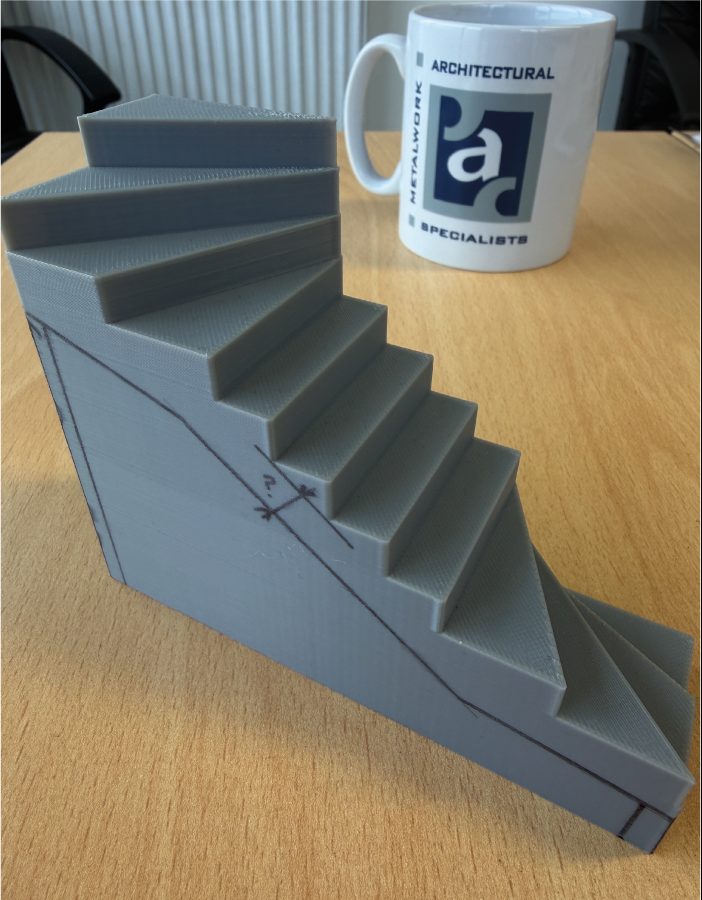
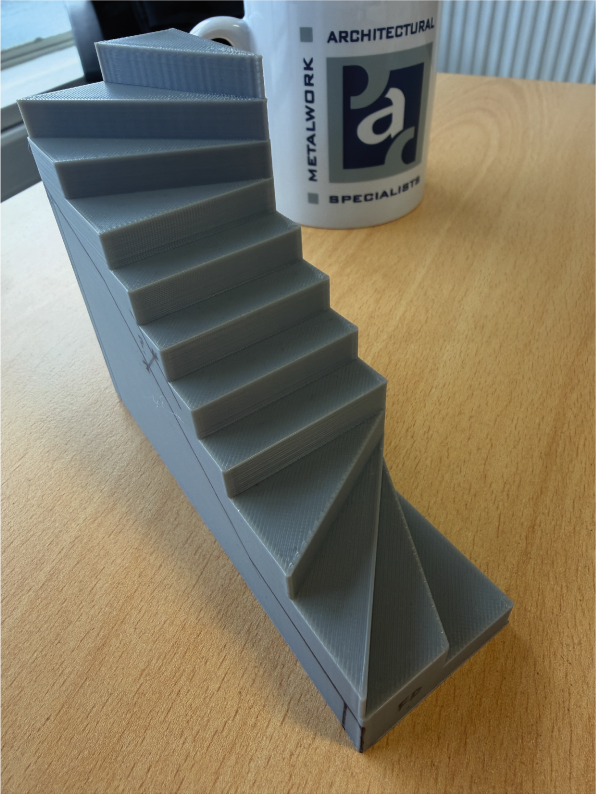
The images shown are of 3D prints produced at a very early tender stage of a recent project to demonstrate how they might be presented to a client.
Figures 1 & 2 – the structure was printed as a whole block and then marked up to show stringer lines (support system) and posts to the corners.
-
- Figure 1
-
- Figure 2
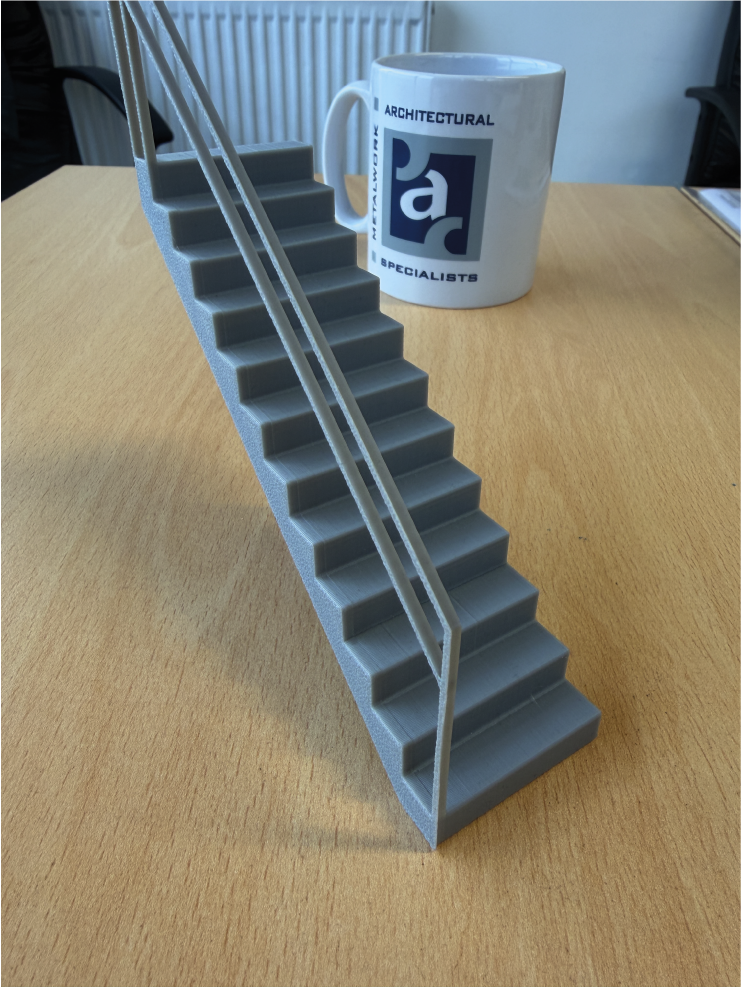
Figure 3 – We created this example to demonstrate why a single standard (uninterrupted set of steps) was inadequate for the flight. When gently pushed, there is a difference in flex between the single and double standard.
-
- Figure 3
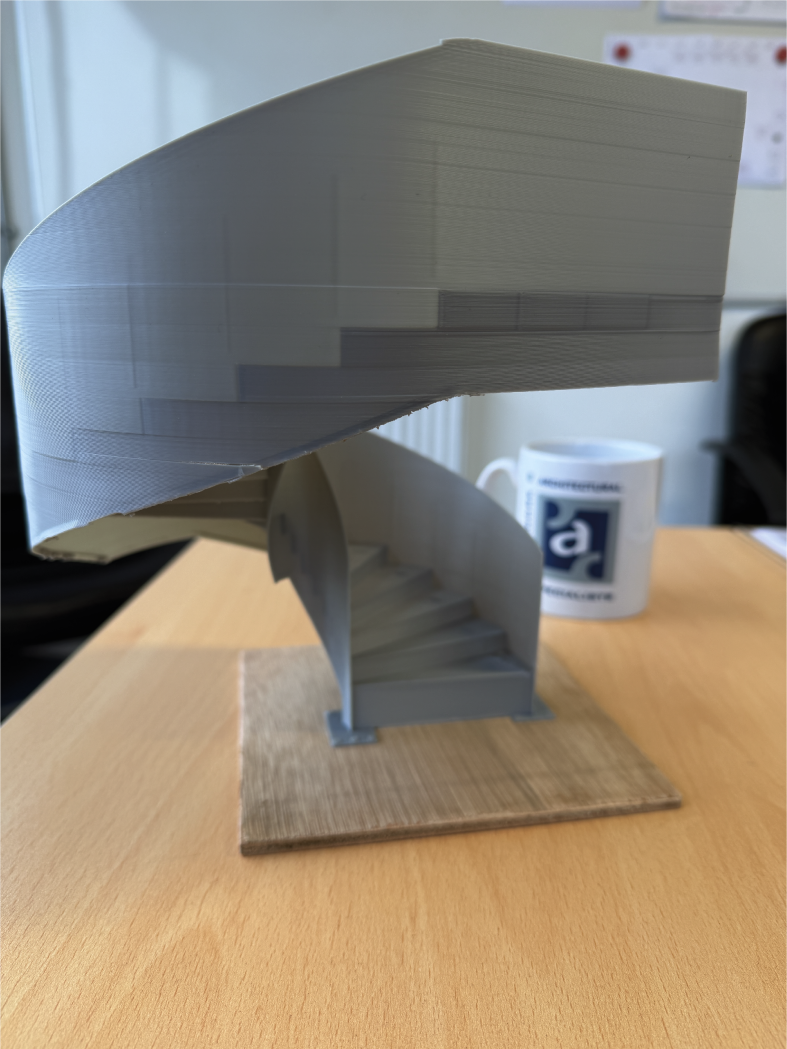
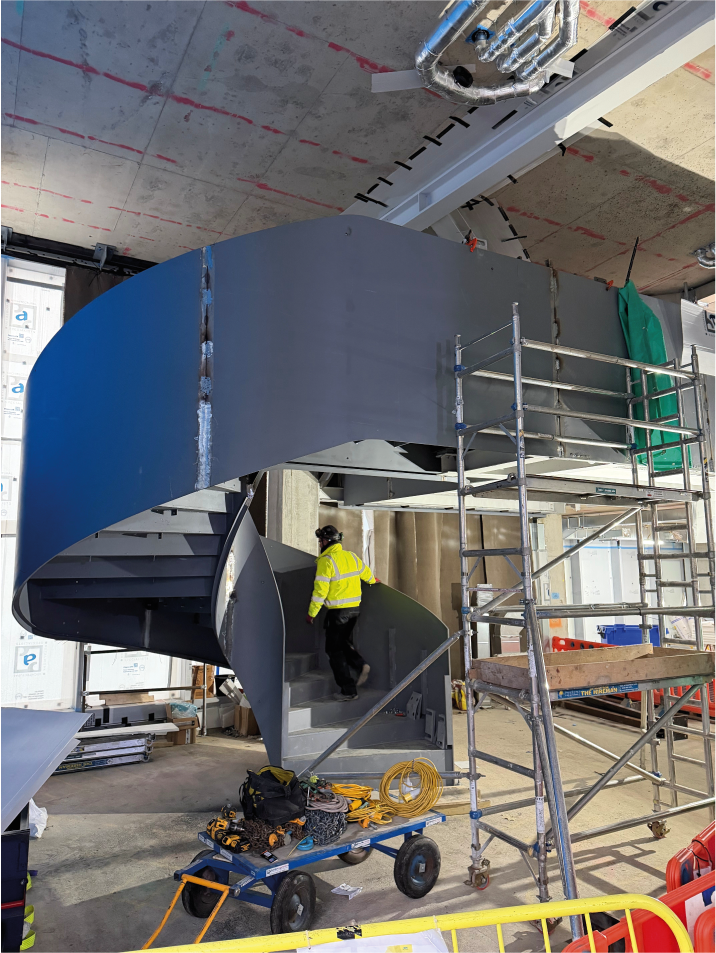
Figures 4 & 5 show a recently installed helical staircase as a 3D printed prototype alongside the finished installation on site.
-
- Figure 4
-
- Figure 5
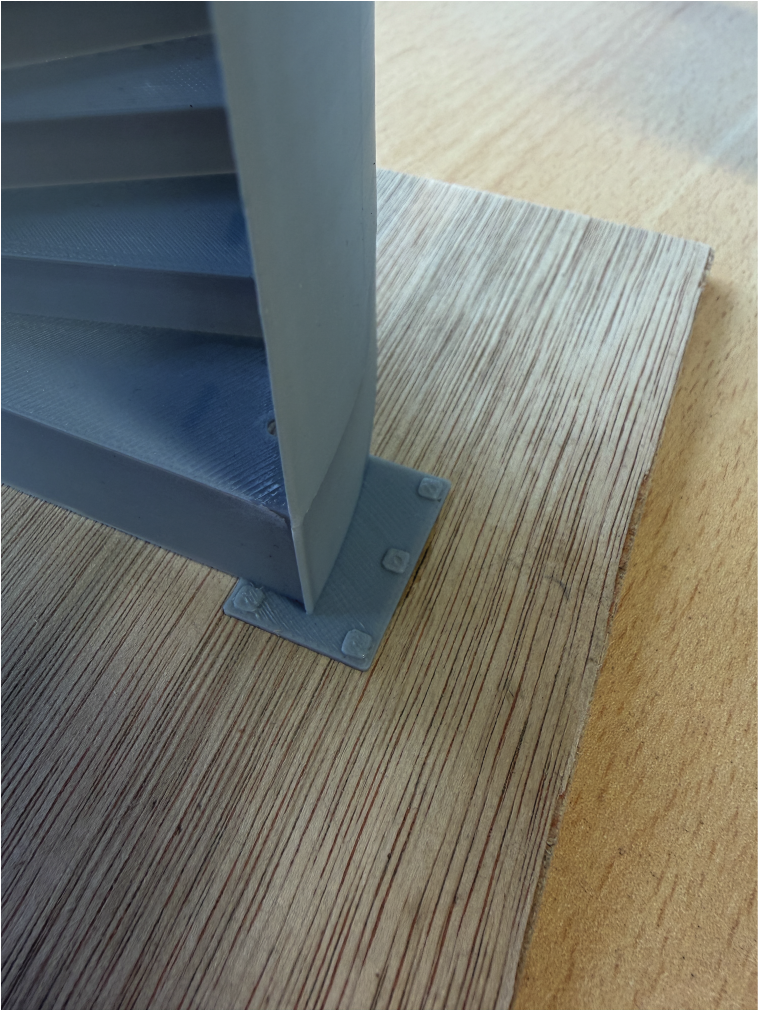
Figure 6 captures the plate washers and fixing bolts on the stairs to demonstrate the intricate, minute detail achievable in 3D printing.
-
- Figure 6
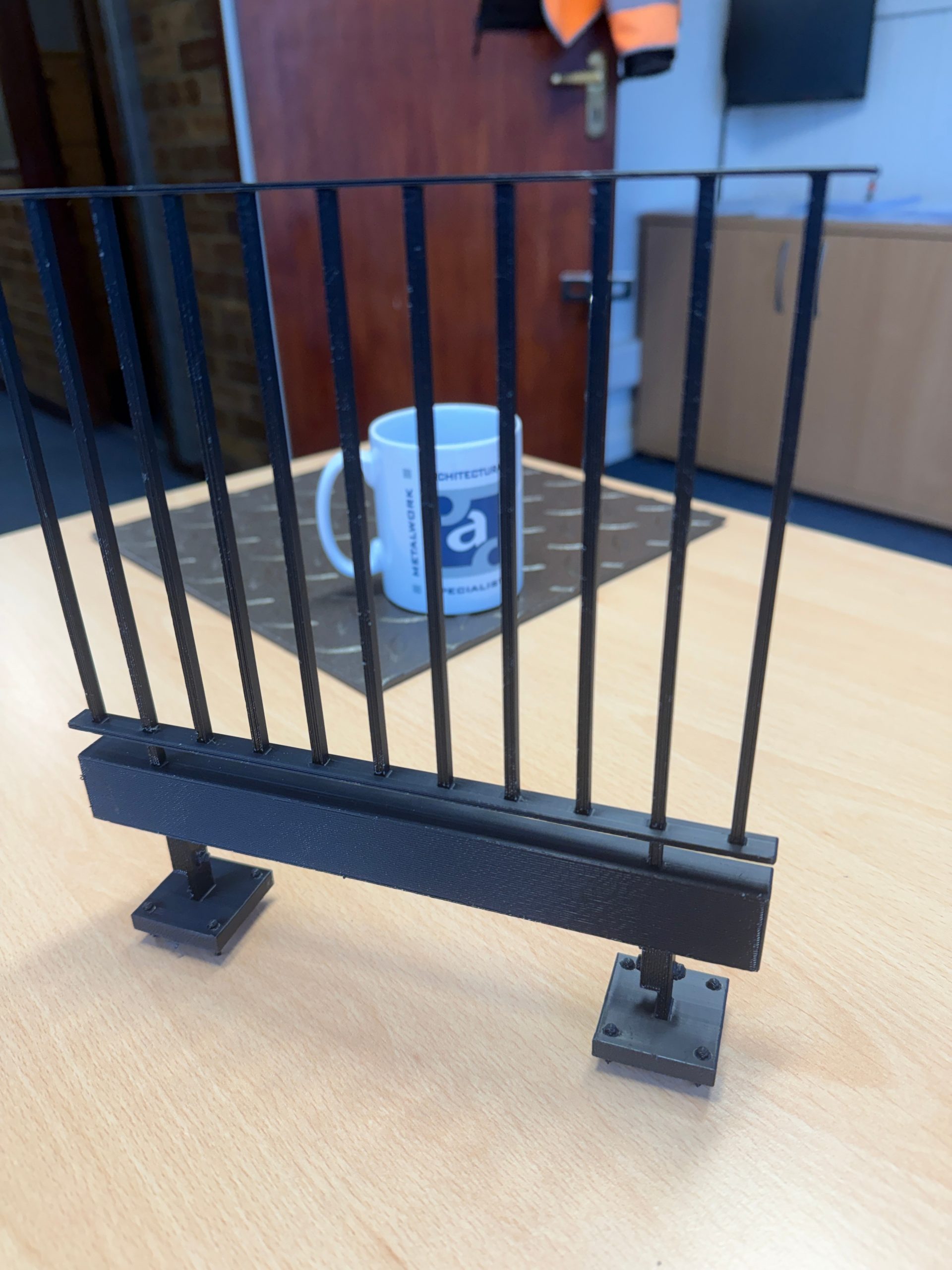
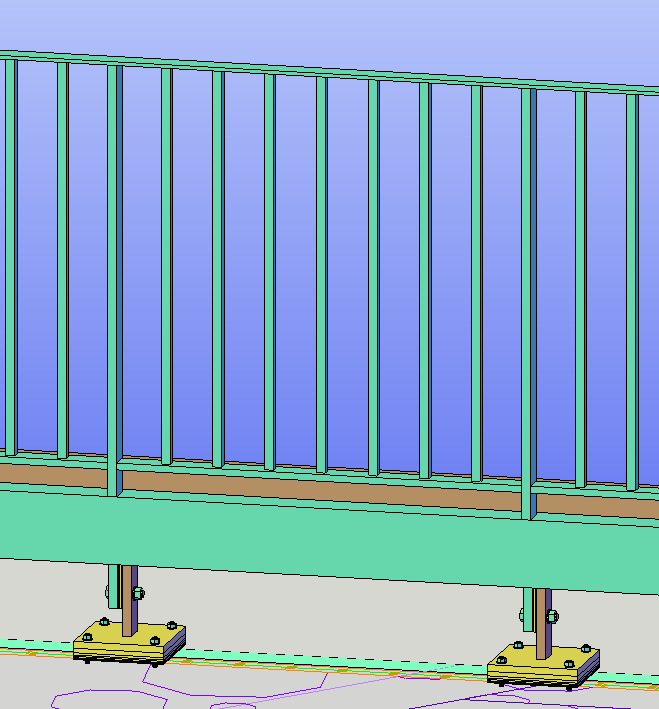
Figures 7 & 8. This is a new project we are working on at pace, so we can get the first fix spigots made and installed on site for waterproofing. Figure 8 is the screenshot from our model.
-
- Figure 7
-
- Figure 8
Find out more about PAD Contracts
To see details of other PAD Contracts projects, visit our projects page. For a chat about your upcoming architectural metalwork project, speak to the PAD Contracts team.
